01
The king who served a cow
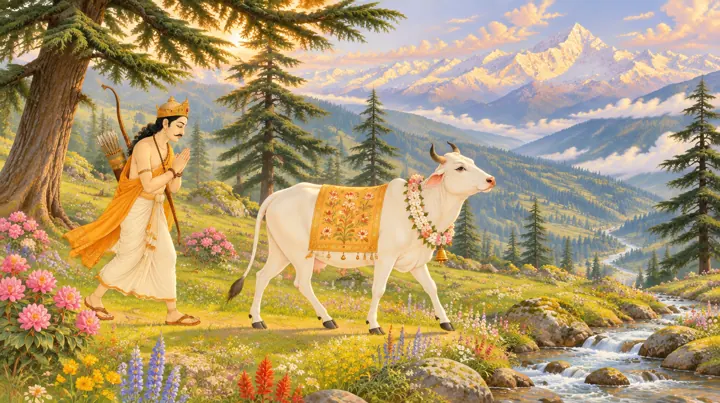
Childless King Dilip learns he once failed to honour the wish-granting cow Surabhi. For twenty-one days he follows her daughter Nandini through the Himalayan forest, grazing when she grazes and resting when she rests.
Epics, dynasties and sacred books, retold chapter by chapter for curious readers, with the original texts and their sources one click away.
Follow a saga from first scene to last, open a sacred text in its own reading room, or step back to the clay tablets of Sumer.
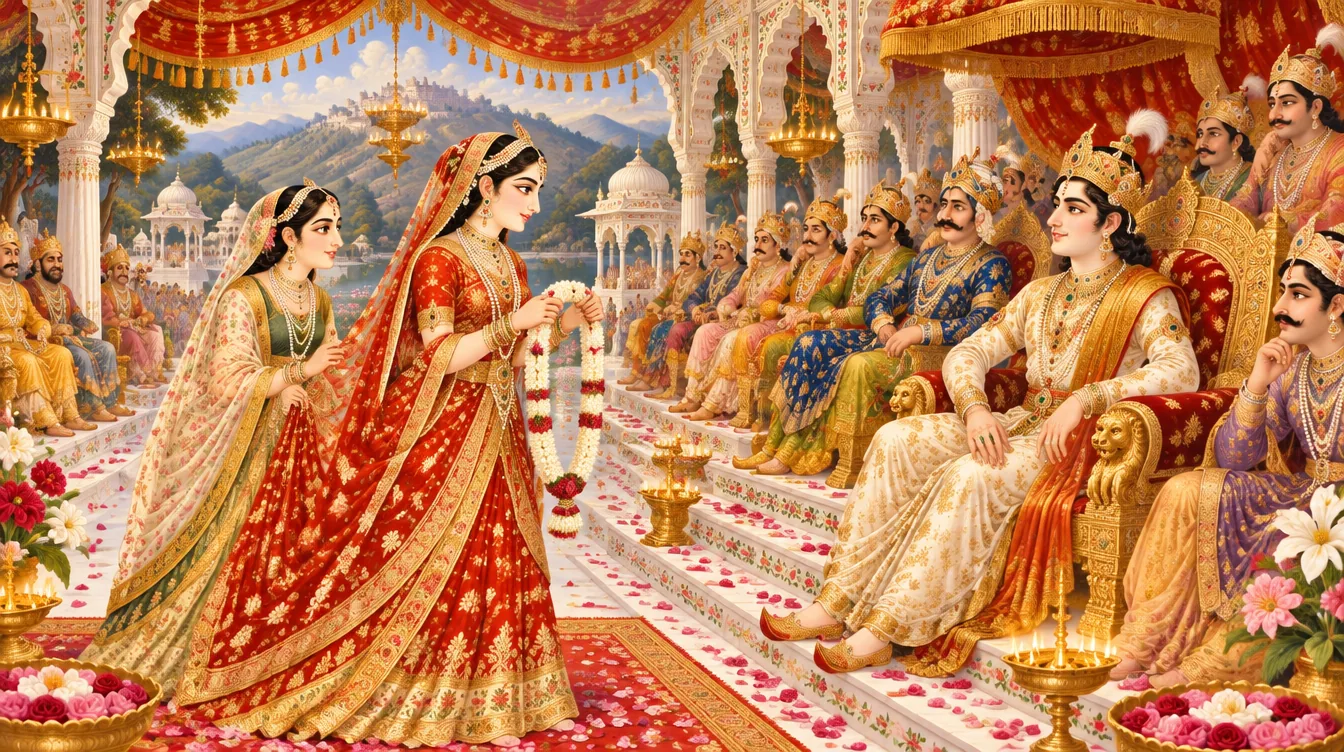
Long stories told as a sequence of scenes, with lineages, maps and a guide to every character.
Read the sagas →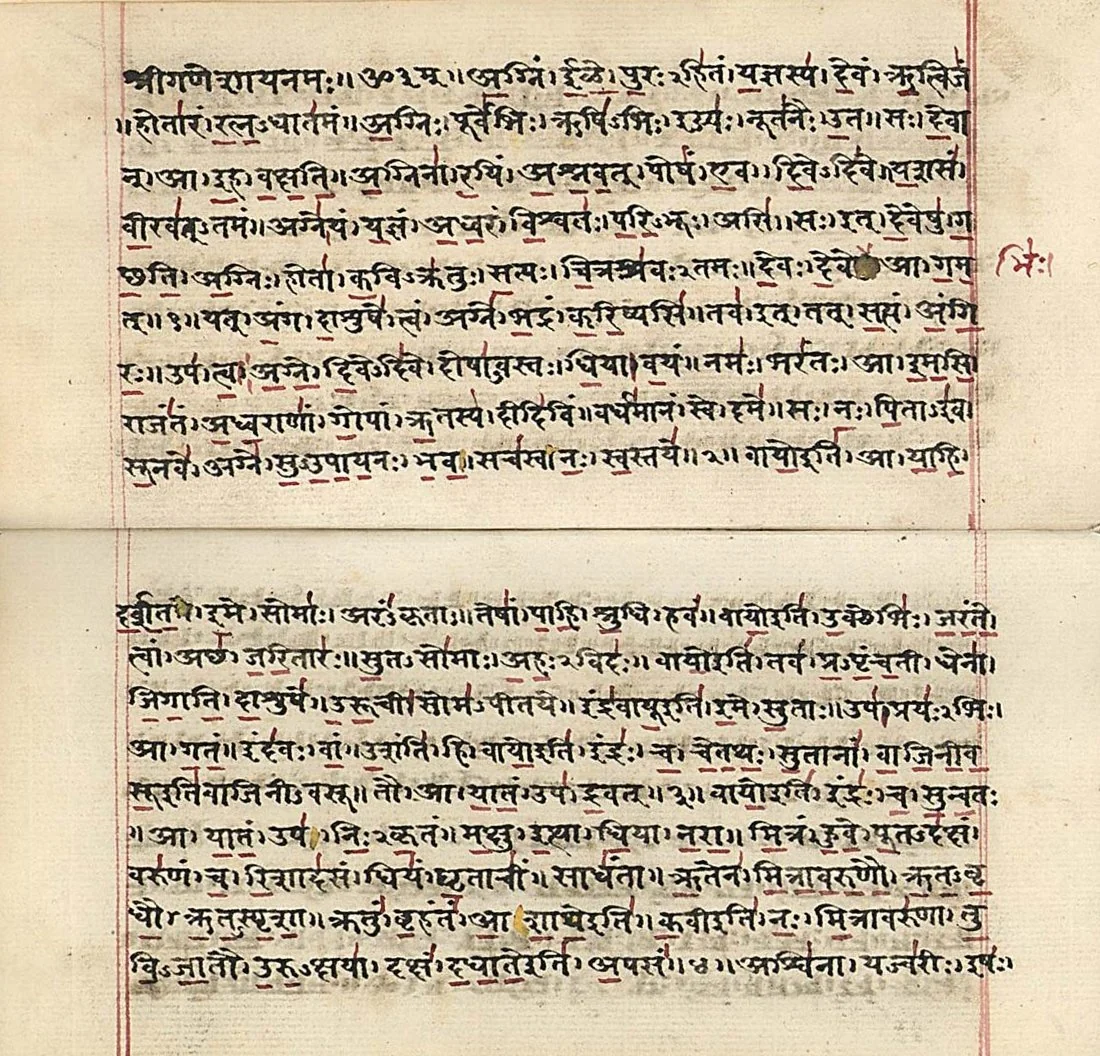
Seven text atlases with reading rooms, glossaries and the source editions behind them.
Open the library →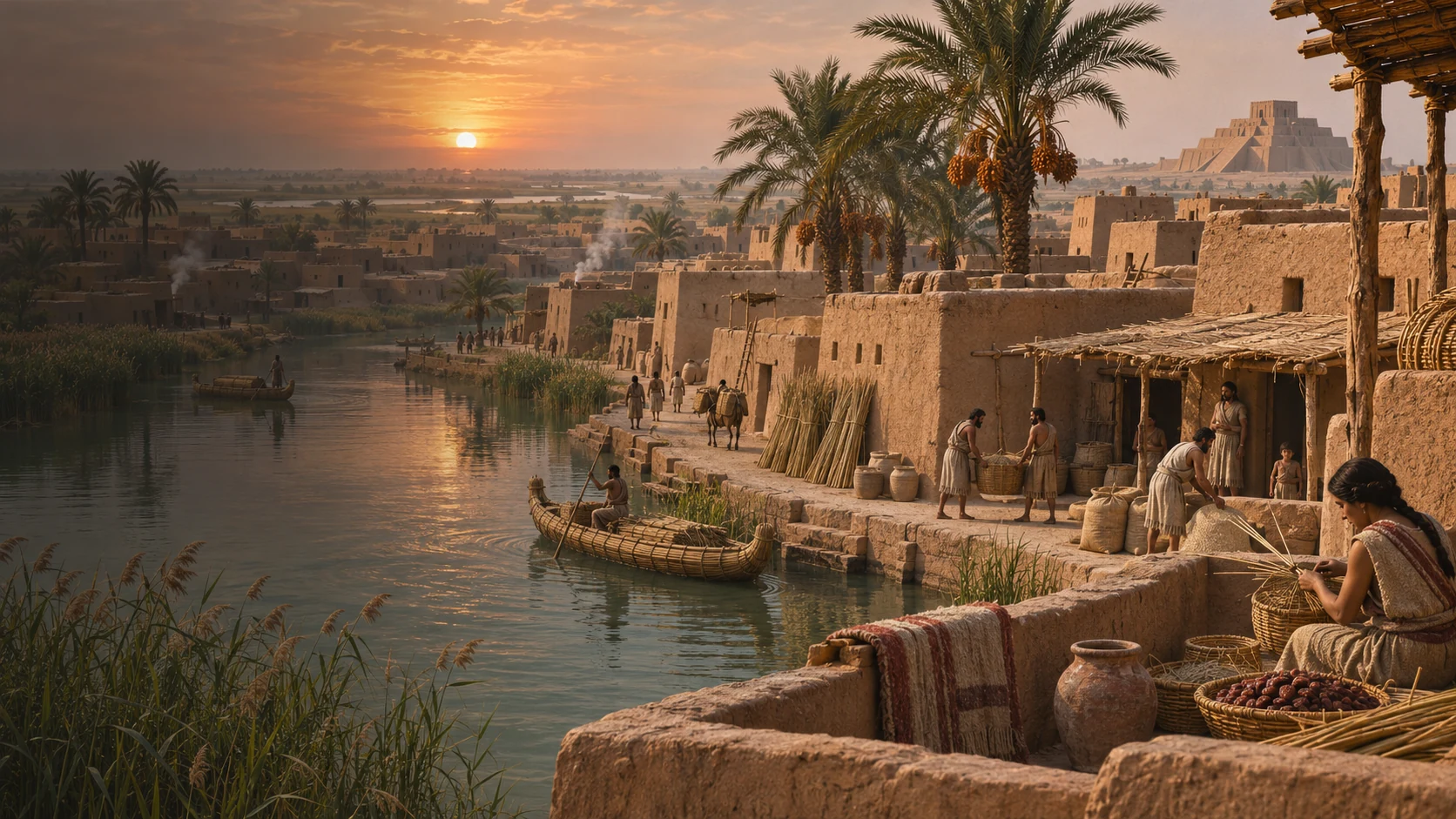
Cities, hymns and everyday life in Sumer, read from the tablets themselves.
Visit Sumer →Kalidasa's epic follows the kings of Ayodhya across many generations: a childless king who serves a sacred cow, a son who gives away the world, a husband undone by a falling garland, the avatar Rama, and at last a pleasure-loving king whose line rests on a child not yet born.
Childless King Dilip learns he once failed to honour the wish-granting cow Surabhi. For twenty-one days he follows her daughter Nandini through the Himalayan forest, grazing when she grazes and resting when she rests.
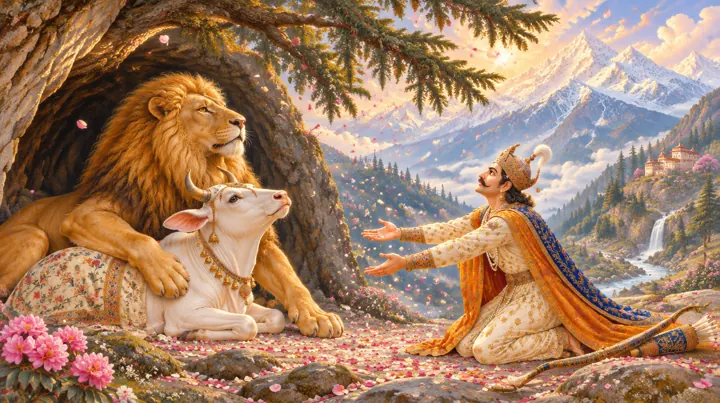
A lion seizes Nandini and Dilip's arrow freezes in his hand. He offers his own body instead. Flowers fall from the sky: the lion was a test, and Nandini grants him a son, Raghu.
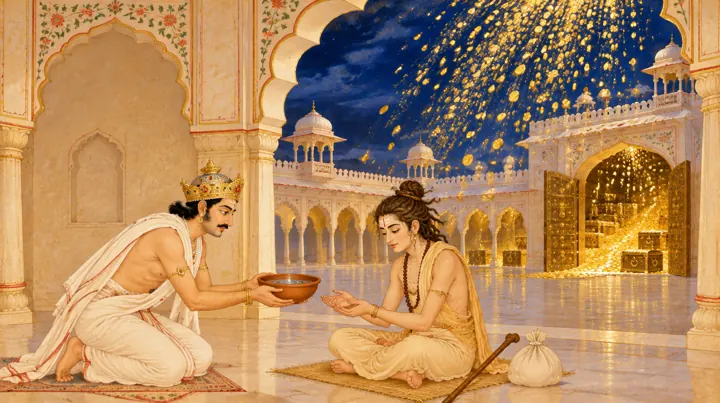
Raghu conquers the four quarters, then gives everything away in the Vishvajit sacrifice. When a student comes asking fourteen crore of gold for his teacher, Kubera rains gold into the treasury overnight.
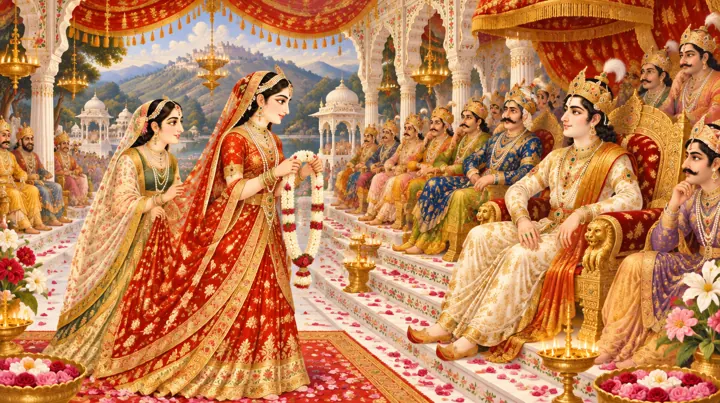
Raghu's son Aja wins a divine weapon from a cursed Gandharva and is chosen by Princess Indumati at her swayamvara, then spares the rival kings who ambush him.
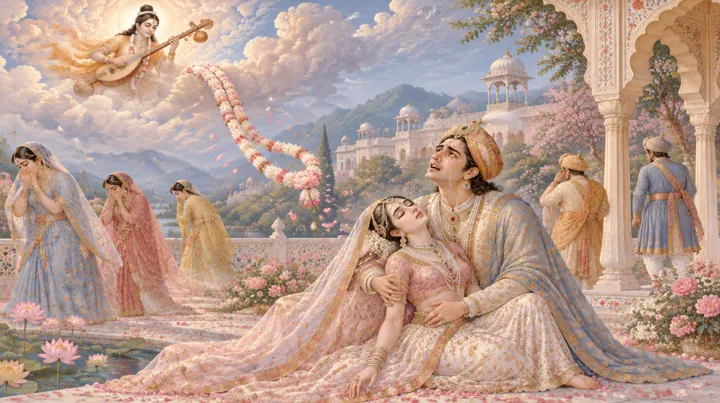
A celestial garland slips from the sage Narada's veena and Indumati dies at its touch. She was an apsara under a curse. Aja raises their son Dasharatha, then lets himself go.
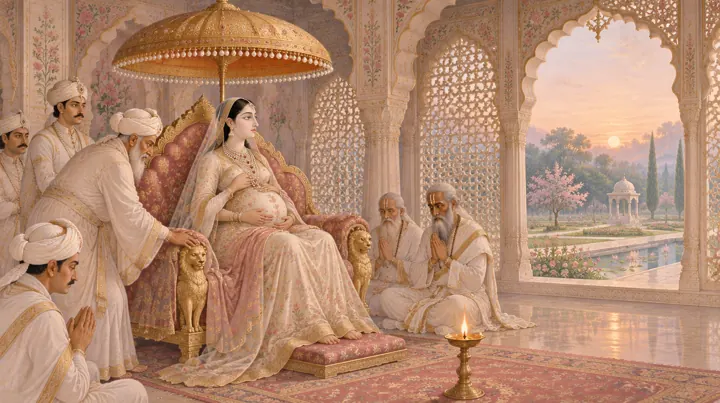
After Rama, Kusha restores a deserted Ayodhya and a long line of kings follows. The last, Agnivarna, lives for pleasure and dies of a wasting illness. The poem ends with his pregnant queen on the throne.
Each atlas keeps three things apart: what tradition says, what historians ask, and what a reader can check in the text.
Every retelling names the work it comes from and the editions behind it. Where traditions differ we say so. Where a picture is an artist's impression rather than a historical record, the caption says that too.


